
Introduction
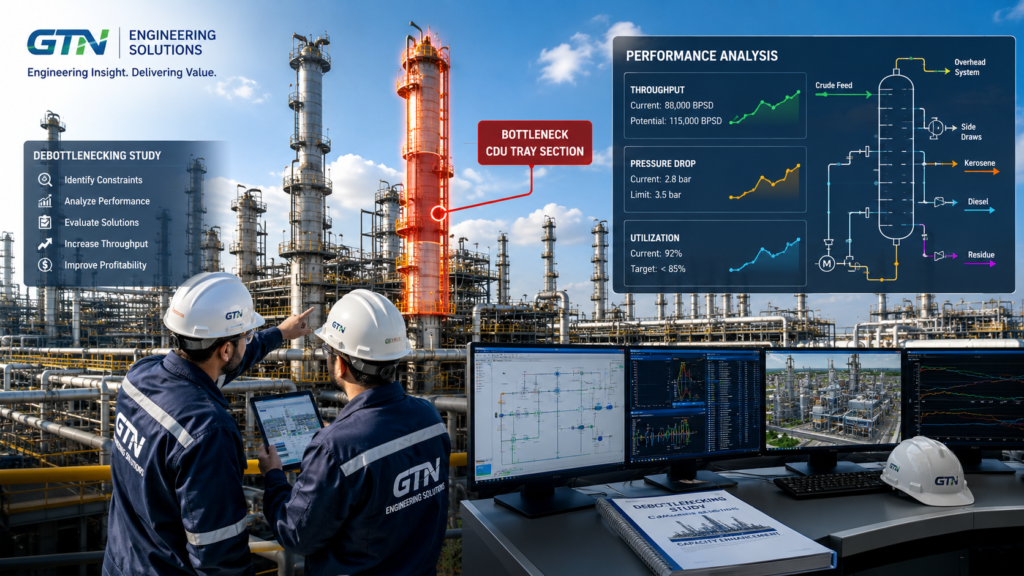
Refinery Bottlenecks can limit production, reduce efficiency, and increase operating costs. Even when major equipment is designed for high capacity, a single restriction in the process can affect the performance of the entire refinery. As demand for refined products continues to grow, refinery operators must identify and remove these constraints to improve throughput and profitability.
Many bottlenecks develop over time due to equipment aging, changing feedstock quality, process modifications, or increased production targets. If they are not addressed, they can prevent a refinery from reaching its full potential.
This article explains common refinery bottlenecks and how engineering teams use proven methods to identify and solve them.Before implementing capacity improvement projects, many operators first conduct a Refinery Feasibility Study to evaluate technical and economic viability.
Why Bottlenecks Matter in Refinery Operations
Every refinery unit is connected to the next. When one piece of equipment cannot handle the required flow or operating conditions, it becomes a bottleneck. This restriction can reduce production rates and increase energy consumption across the facility.
Common impacts of refinery bottlenecks include:
- Reduced refinery throughput
- Higher operating costs
- Increased energy consumption
- Production losses
- Reduced equipment reliability
- Difficulty meeting market demand
Removing bottlenecks helps refineries operate safely while improving production and profitability.
What Is a Refinery Bottleneck?
A refinery bottleneck is any equipment, process, or system that limits the capacity of the overall plant. It acts as a restriction that prevents the refinery from achieving its desired production level.
For example, a refinery may have enough crude processing capacity, but a heat exchanger or compressor may not be able to handle the required load. In such cases, the limiting equipment becomes the bottleneck.
Identifying these restrictions is the first step toward improving plant performance.
Removing bottlenecks helps refineries operate safely while improving production and profitability.
Common Bottlenecks in Refineries
Distillation Unit Constraints
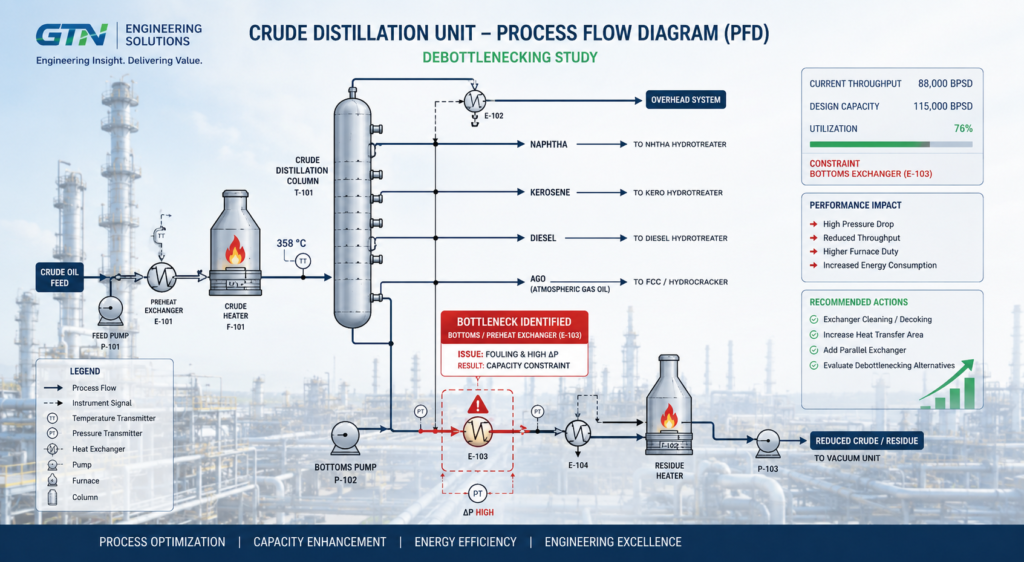
The crude distillation unit is often considered the heart of a refinery. Capacity limitations in columns, trays, pumps, or associated equipment can restrict overall production.
Common issues include:
- Column flooding
- High pressure drop
- Tray efficiency problems
- Pump capacity limitations
Engineering studies help identify the exact source of the restriction and evaluate improvement options.
Heat Exchanger Performance Issues
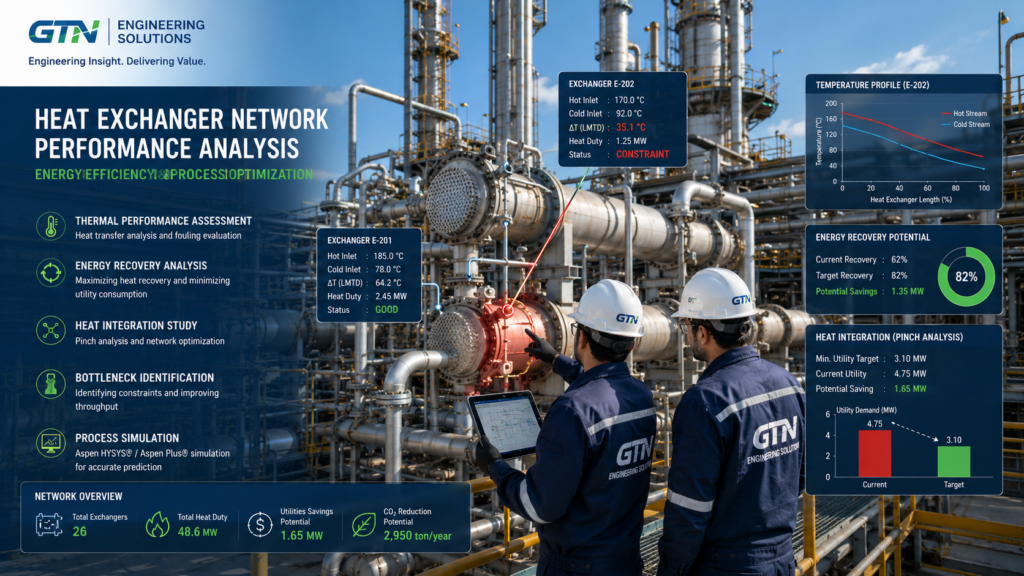
Heat exchangers play a critical role in energy recovery and process efficiency. Over time, fouling can reduce heat transfer performance.
Common signs include:
- Increased fuel consumption
- Reduced heat recovery
- Higher operating temperatures
- Lower process efficiency
Cleaning, redesigning, or upgrading heat exchangers can restore performance and improve energy efficiency.
Pump and Compressor Limitations
Pumps and compressors are essential for moving fluids and gases throughout the refinery. When operating conditions change, these systems may no longer provide the required capacity.
Typical challenges include:
- Insufficient flow rates
- Pressure limitations
- Mechanical wear
- Increased power consumption
Engineers evaluate equipment performance to determine whether modifications or replacements are required.
Furnace Capacity Restrictions
Process furnaces provide the heat needed for many refinery operations. Limited furnace capacity can restrict production increases.
Common causes include:
- Burner inefficiency
- Poor heat distribution
- Tube limitations
- Excessive pressure drops
Performance assessments help identify opportunities to increase furnace efficiency and throughput.
Utility System Constraints
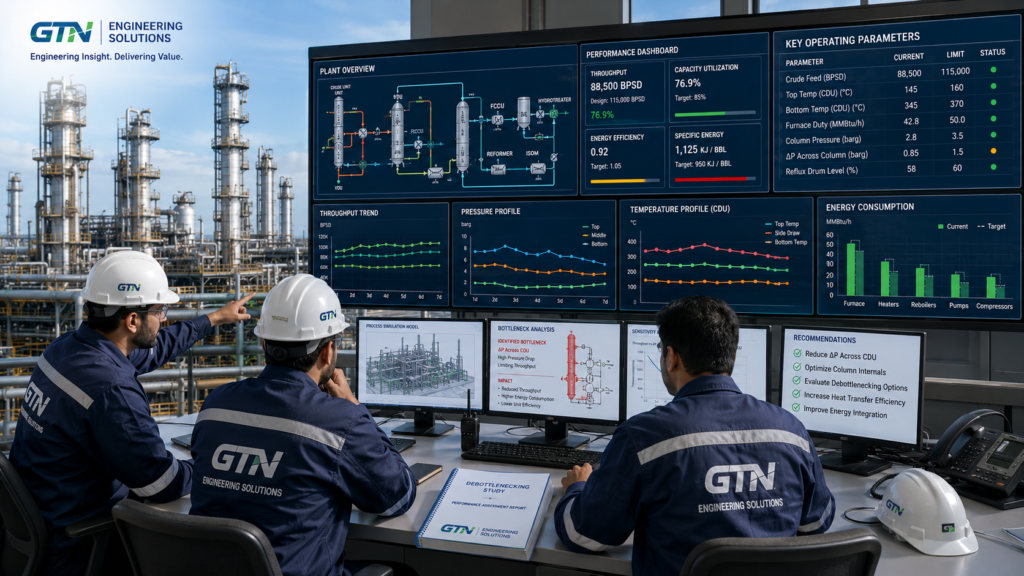
Utility systems support every refinery process. Limitations in steam, cooling water, power, or compressed air systems can affect plant performance.
Examples include:
- Insufficient steam generation
- Cooling water shortages
- Electrical loading issues
- Air system limitations
Utility optimization studies help ensure supporting systems can meet production requirements.
Hydrogen Network Bottlenecks
Hydrogen is essential for many refining processes, especially hydro processing units. An inadequate hydrogen supply can limit production capacity and product quality.
Common concerns include:
- Insufficient hydrogen production
- Distribution limitations
- Network imbalance
- Increased hydrogen losses
Hydrogen network optimization can improve utilization and support higher production rates.
Flare System Limitations
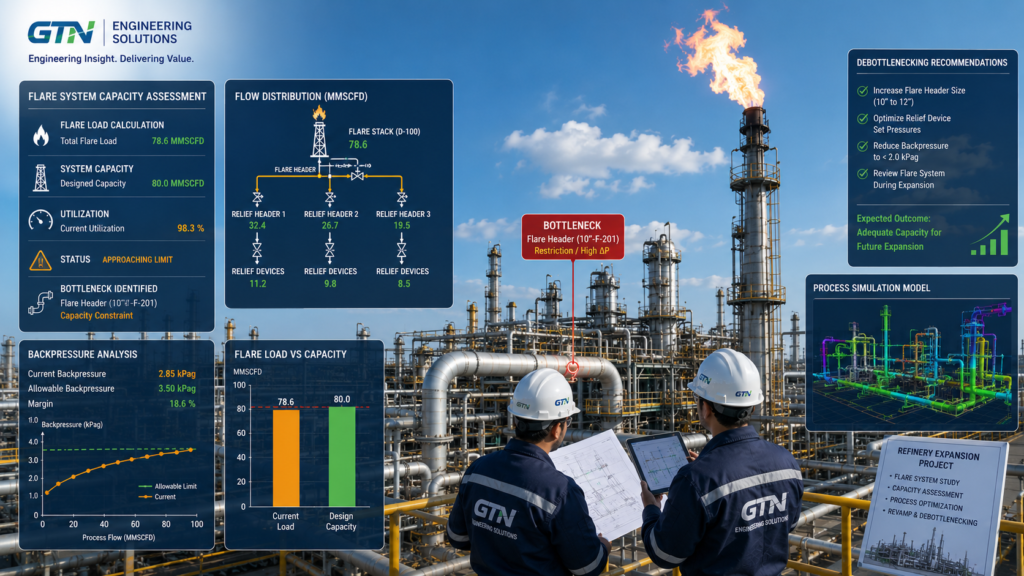
Flare systems are important for refinery safety. During plant expansion or revamp projects, existing flare systems may not have enough capacity to handle additional loads.
Potential issues include:
- Increased backpressure
- Capacity limitations
- Regulatory compliance concerns
Flare system studies help identify necessary upgrades before implementation of expansion projects.
How Engineers Identify Bottlenecks
Process Simulation
Modern process simulation tools help engineers create digital models of refinery operations. These models allow different operating scenarios to be tested without affecting actual production.
Benefits include:
- Faster analysis
- Improved decision-making
- Reduced project risk
- Better understanding of system limitations
Data Analysis
Historical plant data provides valuable information about equipment performance and operating trends.
Engineers review:
- Flow rates
- Temperatures
- Pressures
- Energy consumption
- Equipment utilization
This analysis helps identify hidden constraints affecting refinery performance.
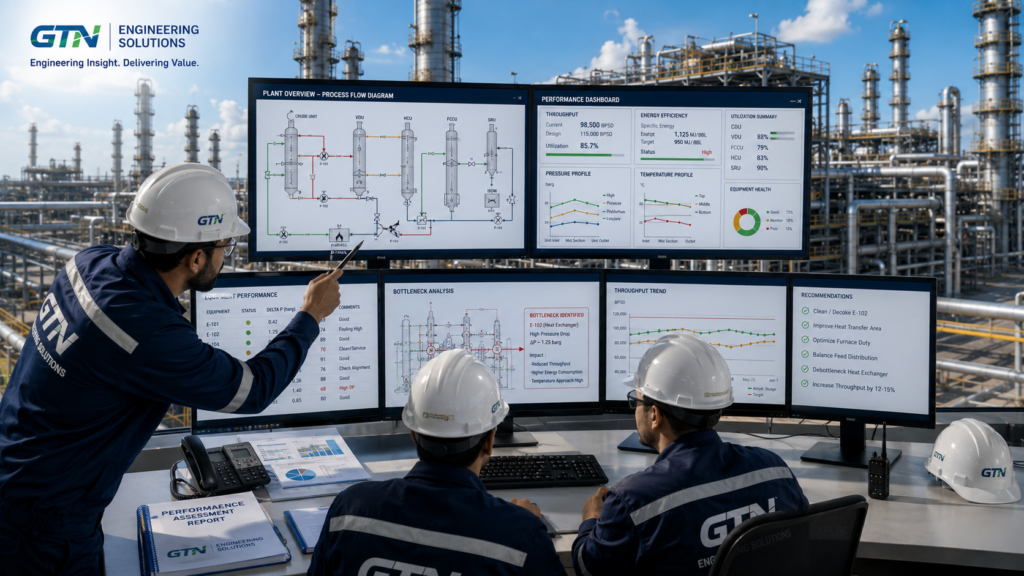
Plant Performance Assessment
Site assessments combine field observations with operational data to determine the root causes of bottlenecks.
These studies provide practical recommendations that can be implemented with minimal disruption to operations.
Engineering Solutions for Refinery Bottlenecks
Debottlenecking Studies
Debottlenecking studies evaluate refinery systems to identify capacity restrictions and develop cost-effective solutions.
Benefits include:
- Increased throughput
- Improved efficiency
- Reduced capital investment
- Better asset utilization
Equipment Modifications
In some cases, simple equipment modifications can remove production constraints.
Examples include:
- Upgrading pump impellers
- Modifying column internals
- Improving heat exchanger performance
- Increasing compressor capacity
Process Optimization
Process optimization focuses on improving operating conditions without major equipment changes.
Common improvements include:
- Adjusting operating parameters
- Optimizing energy use
- Improving process control
- Enhancing unit integratio
Revamp Projects
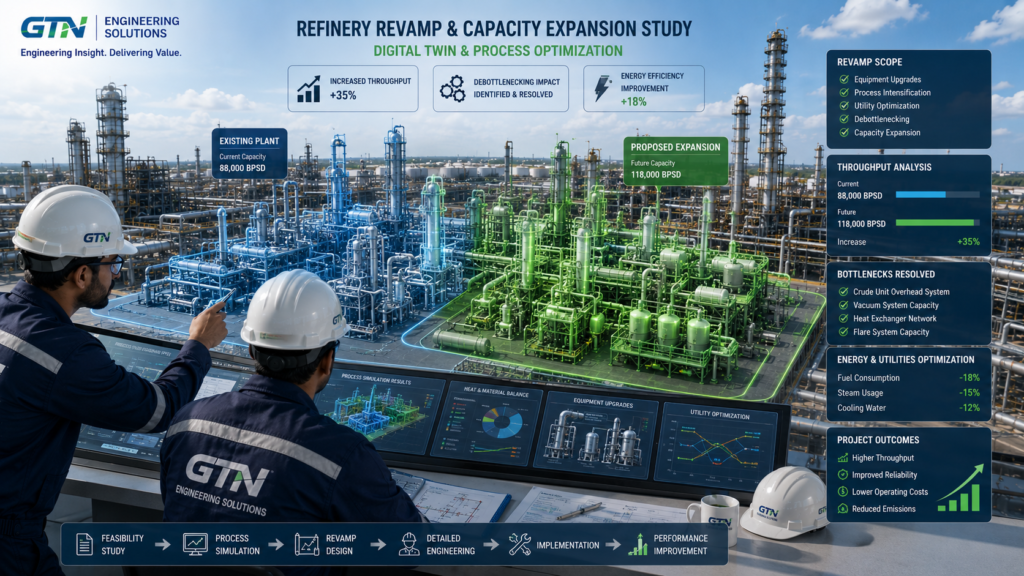
When production targets increase significantly, larger revamp projects may be required.
These projects can include:
- Equipment replacement
- Process redesign
- Utility upgrades
- Capacity expansion
Proper engineering studies help ensure successful project implementation.
Benefits of Eliminating Bottlenecks
Removing refinery bottlenecks provides several operational and financial benefits.
These include:
- Higher production capacity
- Improved energy efficiency
- Reduced operating costs
- Better equipment utilization
- Enhanced process reliability
- Increased profitability
A structured engineering approach ensures improvements are technically sound and economically justified.
Conclusion
Refinery Bottlenecks can significantly affect production, efficiency, and profitability. Identifying these constraints requires a detailed understanding of refinery operations, equipment performance, and process interactions.
Through process simulation, performance assessments, and debottlenecking studies, engineering teams can identify practical solutions that increase throughput while maintaining safe and reliable operations.
As refineries continue to face growing production demands, addressing bottlenecks remains one of the most effective ways to improve overall plant performance and maximize the value of existing assets.