Introduction
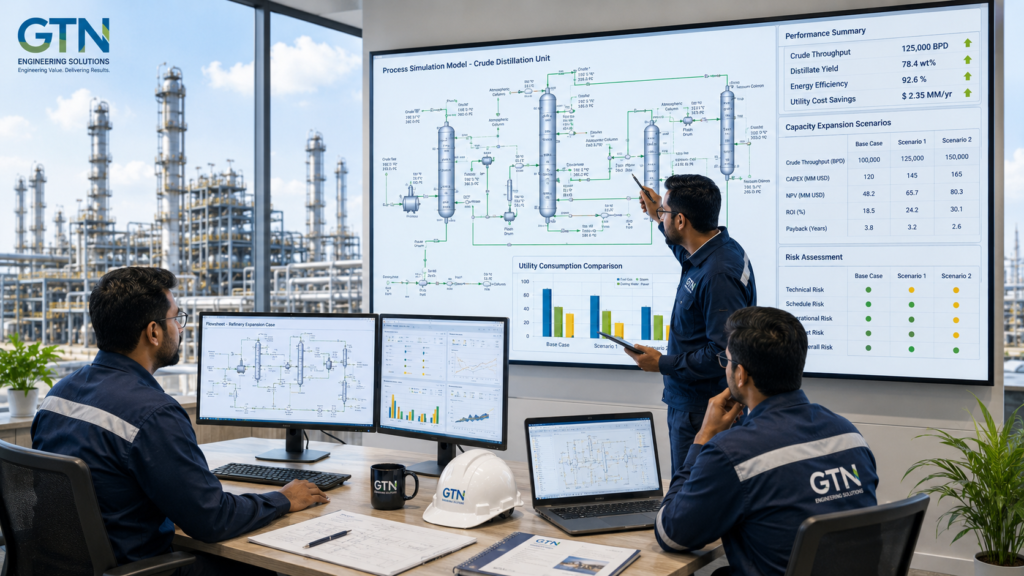
Plant expansion and revamp projects help companies increase production, improve efficiency, and meet changing market demands. However, these projects also involve technical, operational, and financial risks. This is where Process Simulation for Plant Expansion becomes valuable.
Process simulation allows engineers to test different operating conditions in a virtual environment before making changes in the actual plant. It helps identify potential problems early, evaluate different solutions, and improve decision-making. As a result, companies can reduce project risks, avoid costly mistakes, and achieve better project outcomes.
Whether a refinery, petrochemical plant, or chemical processing facility is planning an expansion or modification, process simulation plays a key role in ensuring project success.
Why Risk Management Matters in Plant Expansion and Revamp Projects
Plant expansion and revamp projects often involve significant investment. Even small design errors can lead to production losses, equipment issues, safety concerns, or higher operating costs.
Many plant modifications affect multiple systems at the same time. A change in one section may create unexpected problems in another part of the process. Without proper evaluation, companies may face delays, budget overruns, and performance issues after implementation.
Effective risk management helps project teams understand these challenges before construction or installation begins. This reduces uncertainty and improves project planning.
Common Risks Faced During Plant Modifications
Capacity Shortfalls
One of the most common risks is failing to achieve the desired production increase. In some cases, plant modifications may not deliver the expected capacity because of hidden process limitations.
Process simulation helps verify whether the proposed changes can meet production targets before investment decisions are made.
Equipment Limitations
Existing equipment may not be suitable for higher throughput conditions. Pumps, compressors, heat exchangers, and columns can become bottlenecks during expansion projects.
Simulation studies help engineers identify equipment constraints and evaluate possible solutions before implementation.
Energy Consumption Increases
Increasing plant capacity often increases utility consumption. Steam, fuel, cooling water, and electricity requirements may rise beyond available limits.
By using simulation models, engineers can predict utility demand and develop energy-efficient operating strategies.
Operational Instability
Plant modifications can affect temperature profiles, pressure balances, flow rates, and product quality. These changes may lead to unstable operation if not properly assessed.
Process simulation helps evaluate operating conditions and maintain stable plant performance after modifications.
What Is Process Simulation?
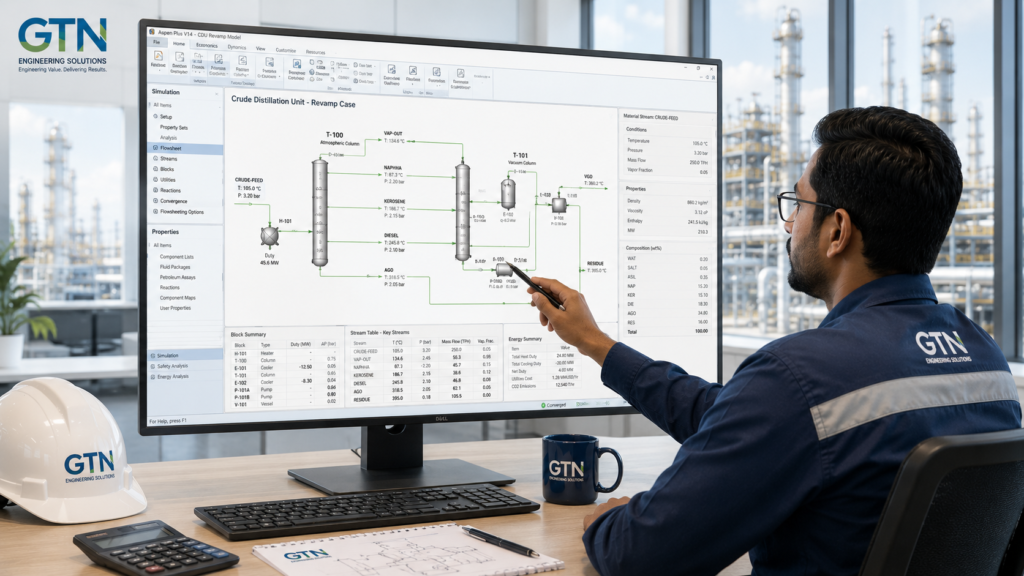
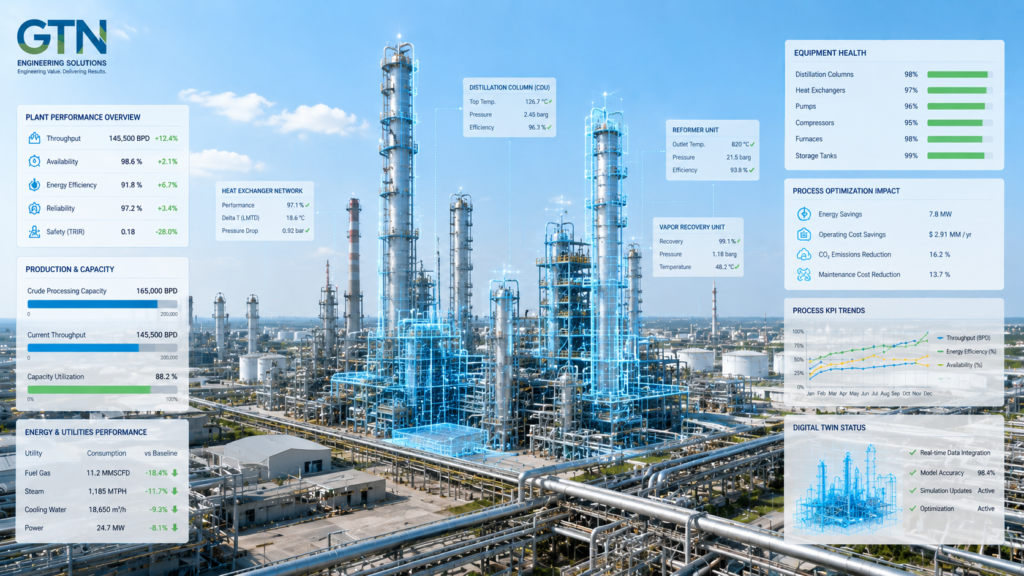
Process simulation is a computer-based method used to model industrial processes and predict plant performance under different operating conditions.
Engineers create a digital representation of the plant using specialized simulation software. The model includes equipment, process streams, operating conditions, and material balances.
Once the model is validated, different scenarios can be tested without affecting actual plant operations.
This approach allows companies to evaluate project options, understand process behavior, and make informed engineering decisions.
How Process Simulation Helps Reduce Project Risk
Validating Design Changes Before Implementation
One of the biggest advantages of simulation is the ability to test design changes before they are implemented in the plant.
Engineers can evaluate proposed modifications and verify whether they will achieve project objectives. This reduces uncertainty and minimizes the risk of costly design errors.
Identifying Bottlenecks Early
Hidden bottlenecks often limit plant performance. These restrictions may not be visible during routine operations.
Process simulation helps identify equipment and process constraints before project execution. Early identification allows engineers to develop effective solutions and avoid unexpected problems.
Evaluating Multiple Expansion Scenarios
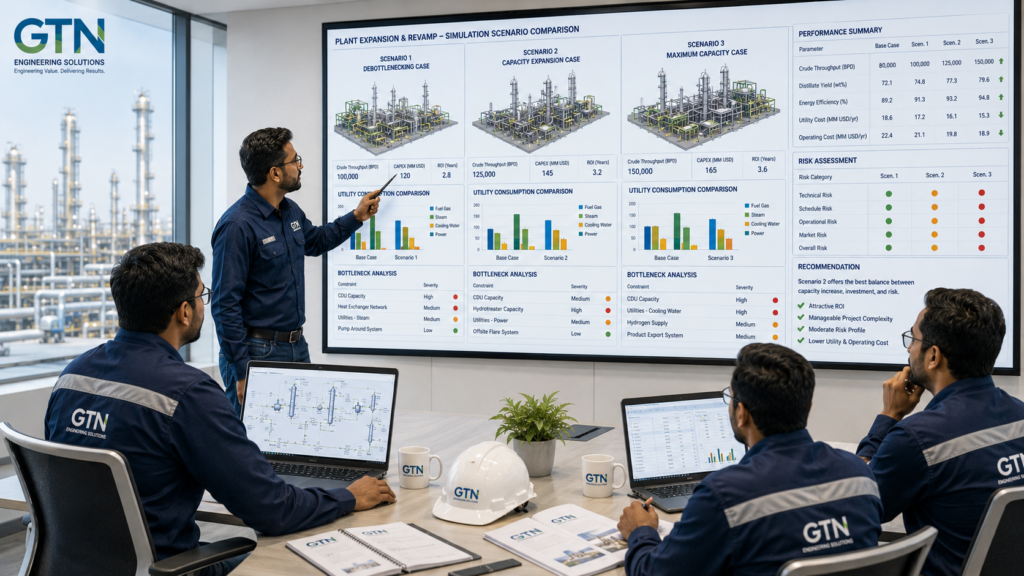
Every expansion project has several possible approaches. Selecting the right option can significantly impact project cost and performance.
Simulation allows engineers to compare different scenarios and determine the most practical solution based on technical and economic considerations.
Optimizing Utility Consumption
Utility systems play a major role in plant operating costs.
Simulation studies help optimize steam usage, cooling water demand, fuel consumption, and energy efficiency. This supports both operational savings and sustainability goals.
Supporting Safer Plant Operations
Safety is a critical consideration in any expansion or revamp project.
Simulation helps evaluate process conditions under different operating scenarios. Engineers can identify potential risks and implement preventive measures before modifications are introduced.
Applications of Process Simulation in Refinery and Petrochemical Projects
Process simulation is widely used across the refining and petrochemical industries.
Common applications include:
- Capacity expansion studies
- Plant revamp projects
- Debottlenecking studies
- Energy optimization assessments
- Heat exchanger network analysis
- Utility system evaluations
- Process troubleshooting
- Feasibility studies
- New unit design verification
- Operational improvement programs
By providing detailed process insights, simulation supports better engineering decisions throughout the project lifecycle.
Benefits of Process Simulation for Project Stakeholders
Process simulation offers benefits to plant owners, operators, engineering teams, and investors.
Key advantages include:
- Reduced technical risk
- Improved project planning
- Better investment decisions
- Increased operational reliability
- Lower implementation costs
- Improved energy efficiency
- Enhanced plant safety
- Faster project execution
- Higher confidence in project outcomes
These benefits make process simulation an essential tool for modern industrial projects.
Why Choose GTN Engineering Solutions for Process Simulation Studies
At GTN Engineering Solutions, we help clients make informed decisions through detailed process simulation and engineering studies.
Our team supports refinery, petrochemical, and process industry projects by developing reliable simulation models, evaluating operating scenarios, and identifying practical improvement opportunities.
Whether the objective is plant expansion, debottlenecking, energy optimization, or process revamp, our simulation studies help reduce uncertainty and improve project success.
We focus on delivering technically sound solutions that align with operational goals, safety requirements, and business objectives.
Conclusion
Plant expansion and revamp projects offer significant opportunities for growth, but they also introduce technical and operational risks. Identifying these risks early is essential for achieving successful project outcomes.
Process Simulation for Plant Expansion provides a reliable way to evaluate design changes, identify bottlenecks, optimize energy use, and improve plant performance before implementation. By using simulation tools during project planning, companies can reduce uncertainty, improve decision-making, and maximize return on investment.
As industrial facilities continue to pursue efficiency and capacity improvements, process simulation remains one of the most valuable tools for reducing project risk and supporting long-term operational success.
Need Expert Support for Your Plant Expansion Project?
Plant expansion and revamp projects require careful planning and technical evaluation. GTN Engineering Solutions provides process simulation studies, feasibility assessments, debottlenecking analysis, and process optimization services to help organizations reduce risk and improve project outcomes.
Contact our engineering team to discuss your project requirements and identify the most effective path toward safe, efficient, and reliable plant performance.