
Engineering Insights

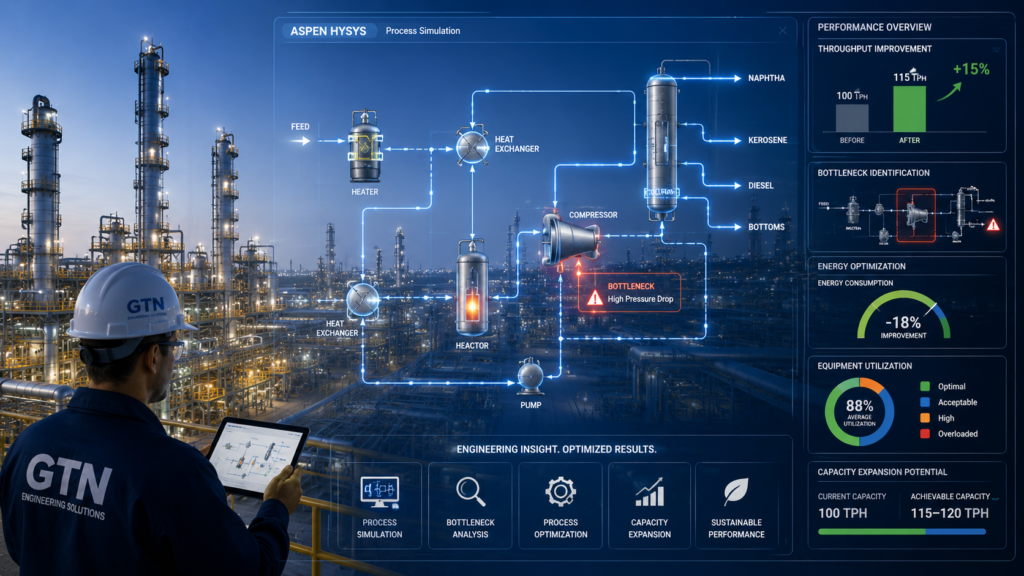
Process simulation model displayed on an engineering workstation showing refinery process flow diagrams, equipment performance data, and plant modification analysis before implementation

Process Simulation for Plant Modifications: 10 Critical Engineering Checks

Introduction Process Simulation for Plant Modifications helps engineers evaluate process changes before they are implemented in a plant. Many refineries, petrochemical plants, and chemical facilities modify their operations to increase production, improve product quality, reduce energy consumption, or solve process issues. However, even a small change can affect equipment performance, utility systems, operating conditions, and […]

Process Simulation for Plant Modifications: 10 Critical Engineering Checks Read More »

Engineers developing and validating a process simulation model using refinery plant data and performance analysis

How Engineers Build and Validate a Process Simulation Model

Introduction A Process Simulation Model helps engineers understand how a process plant will perform before making operational or design changes. Instead of relying on assumptions, engineers create a digital representation of the plant and use it to evaluate equipment performance, operating conditions, and process behavior. In industries such as refining, petrochemicals, chemicals, and oil &

How Engineers Build and Validate a Process Simulation Model Read More »

Chemical Plant Troubleshooting in a modern refinery control room

Chemical Plant Troubleshooting: A Structured Engineering Approach

Introduction Chemical Plant Troubleshooting is a systematic engineering process used to identify, analyze, and solve operational problems in industrial facilities. Every chemical plant, refinery, and petrochemical facility faces challenges such as reduced production, high energy consumption, equipment performance issues, or unstable operations. When these problems are not addressed properly, they can increase operating costs, affect

Chemical Plant Troubleshooting: A Structured Engineering Approach Read More »

Refinery capacity expansion engineering studies including feasibility analysis, process simulation, safety assessment, and energy optimization

Refinery Capacity Expansion: Key Engineering Studies Required Before Investment

Introduction Refinery Capacity Expansion is often the preferred strategy for refinery operators looking to increase production, improve profitability, and meet growing market demand. However, expanding refinery capacity involves significant investment and technical challenges. A decision based only on production targets can lead to costly mistakes, operational issues, and project delays. Before investing in any expansion

Refinery Capacity Expansion: Key Engineering Studies Required Before Investment Read More »

Pinch Analysis and Heat Integration for refinery energy optimization and heat recovery

Pinch Analysis and Heat Integration: How Refineries Reduce Energy Costs

Introduction Pinch Analysis and Heat Integration are among the most effective methods used by refineries to reduce energy costs and improve process efficiency. Energy is one of the largest operating costs in refinery operations. Every day, valuable heat is lost through cooling systems, exhaust gases, and process streams. However, this wasted energy can often be

Pinch Analysis and Heat Integration: How Refineries Reduce Energy Costs Read More »

Engineers analyzing refinery bottlenecks using process simulation and debottlenecking studies to improve refinery capacity and efficiency

Common Bottlenecks Found in Refineries and How Engineers Solve Them

Introduction Refinery Bottlenecks can limit production, reduce efficiency, and increase operating costs. Even when major equipment is designed for high capacity, a single restriction in the process can affect the performance of the entire refinery. As demand for refined products continues to grow, refinery operators must identify and remove these constraints to improve throughput and

Common Bottlenecks Found in Refineries and How Engineers Solve Them Read More »

Engineers using process simulation software to evaluate plant expansion and revamp project risks

How Process Simulation Reduces Risk in Plant Expansion and Revamp Projects

Introduction Plant expansion and revamp projects help companies increase production, improve efficiency, and meet changing market demands. However, these projects also involve technical, operational, and financial risks. This is where Process Simulation for Plant Expansion becomes valuable. Process simulation allows engineers to test different operating conditions in a virtual environment before making changes in the

How Process Simulation Reduces Risk in Plant Expansion and Revamp Projects Read More »

Process Optimization vs Debottlenecking analysis in a refinery control room using process simulation and bottleneck identification

Process Optimization vs Debottlenecking: Which Approach Delivers Better Results?

Your Plant Isn’t Underperforming Because It’s Too Small Process Optimization vs Debottlenecking is a critical consideration for refineries, petrochemical facilities, and chemical plants looking to improve performance and increase profitability. A refinery, petrochemical facility, or chemical plant may be operating below its true potential without anyone realizing it. Production targets are missed. Energy consumption rises.

Process Optimization vs Debottlenecking: Which Approach Delivers Better Results? Read More »

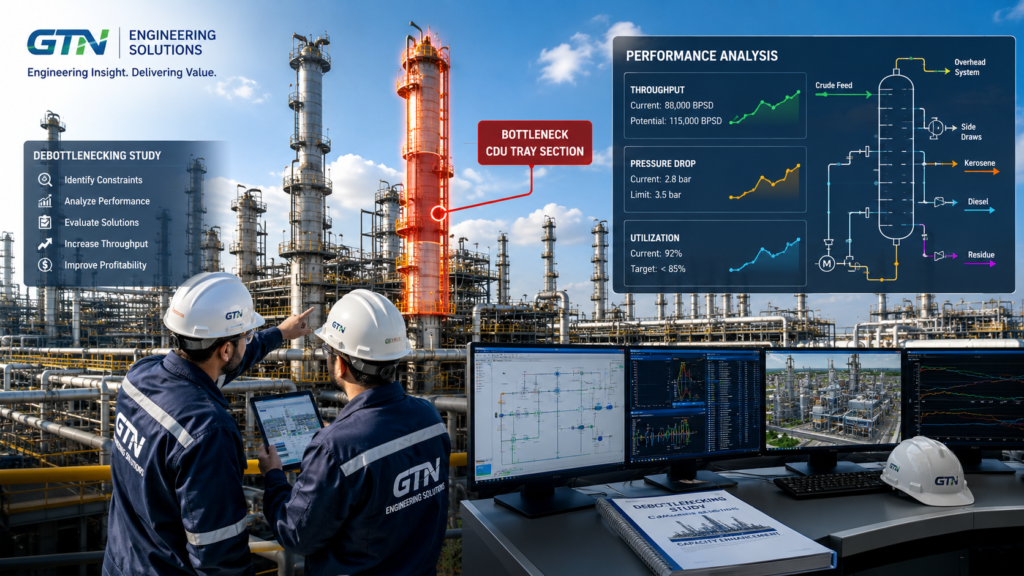
Refinery debottlenecking study showing how engineers increase refinery capacity without major capital investment through process optimization and engineering analysis.

How Debottlenecking Studies Help Increase Refinery Capacity Without Major Capital Investment

Introduction: Is Your Refinery Operating Below Its True Capacity? Refinery debottlenecking studies provide a systematic approach to identifying bottlenecks, evaluating improvement opportunities, and increasing production capacity using existing assets A refinery is designed to process a specific throughput, yet many facilities operate below their theoretical capacity for years without realizing why. When production targets are

How Debottlenecking Studies Help Increase Refinery Capacity Without Major Capital Investment Read More »

Refinery feasibility study involving technical design, engineering analysis and project planning

What Is a Refinery Feasibility Study? A Complete Guide for Project Owners

What Is a Refinery Feasibility Study? A Complete Guide for Project Owners Introduction A refinery feasibility study is one of the most important steps before investing in a refinery or petrochemical project. These projects require substantial capital, technical expertise, regulatory approvals, and long-term planning. A well-executed feasibility study helps project owners evaluate risks, estimate costs,

What Is a Refinery Feasibility Study? A Complete Guide for Project Owners Read More »