
Introduction
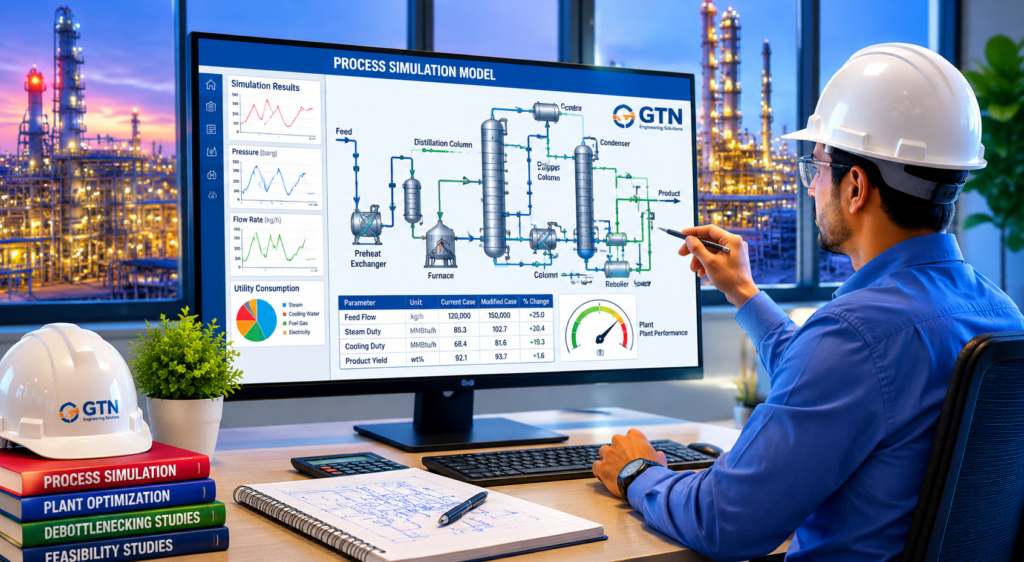
Process Simulation for Plant Modifications helps engineers evaluate process changes before they are implemented in a plant.
Many refineries, petrochemical plants, and chemical facilities modify their operations to increase production, improve product quality, reduce energy consumption, or solve process issues.
However, even a small change can affect equipment performance, utility systems, operating conditions, and overall plant reliability.
Making changes without proper analysis may lead to bottlenecks, higher operating costs, product quality problems, or unexpected shutdowns.
Process simulation allows engineers to test different operating scenarios in a virtual environment before investing in equipment or construction activities.
This approach helps reduce risk, improve decision-making, and increase the chances of a successful plant modification project.
In this article, we discuss ten critical engineering checks that should be validated using Process Simulation for Plant Modifications before implementation.
Why Process Simulation for Plant Modifications Is Important
Every process unit in a plant is connected. A change in one area often affects several other systems.
For example:
- Increasing feed rate may overload downstream equipment.
- Changing operating pressure may affect product quality.
- Adding new equipment may increase utility consumption.
- Removing one bottleneck may create another bottleneck elsewhere.
Process simulation helps engineers understand these impacts before implementation.
The main benefits include:
- Lower project risk
- Better engineering decisions
- Reduced capital spending
- Improved plant reliability
- Higher confidence during project execution
1.How Process Simulation for Plant Modifications Validates Equipment Capacity
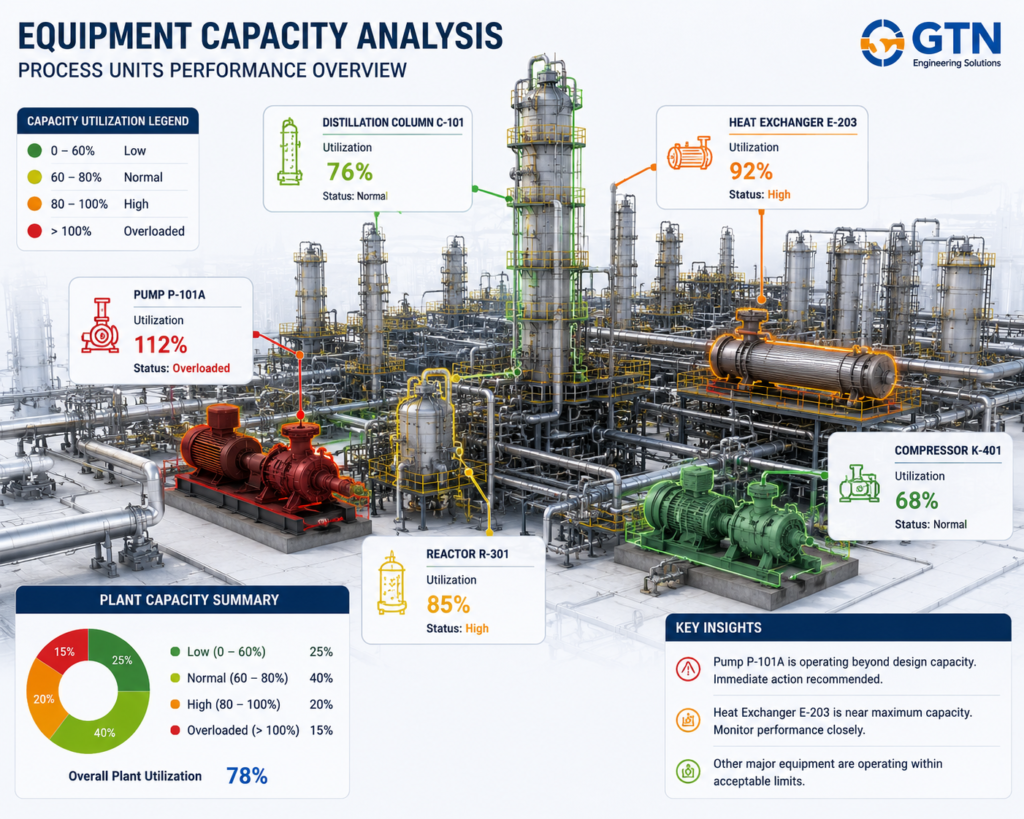
One of the most common modification projects involves increasing plant production.
Before increasing throughput, engineers must verify whether existing equipment can handle higher flow rates.Many facilities perform Debottlenecking Studies to identify equipment limitations before increasing plant capacity.
Process simulation helps evaluate:
- Pumps
- Compressors
- Heat exchangers
- Reactors
- Distillation columns
Without proper validation, equipment may operate beyond design limits.
Example
A refinery increases feed throughput by 10%. The simulation study shows that the existing overhead condenser becomes the limiting factor. Identifying this issue early prevents costly operational problems.
2. Use Process Simulation for Plant Modifications to Check Operating Conditions
When production rates change, operating conditions also change.
Engineers should verify:
- Temperatures
- Pressures
- Flow rates
- Vapor-liquid behavior
- Equipment design limits
Simulation predicts how these parameters will behave after the modification.
This information helps ensure safe and reliable operation.
3. How Process Simulation Protects Product Quality During Plant Modifications
Increasing production is useful only if product quality remains within specification.
Changes in operating conditions can affect:
- Product purity
- Recovery rates
- Composition
- Separation efficiency
Process simulation predicts product quality before plant changes are implemented.
Example
A distillation column may produce on-spec products at current conditions. However, simulation may show quality degradation after increasing throughput.
This allows engineers to adjust the design before implementation.
4.Using Process Simulation to Evaluate Utility Requirements
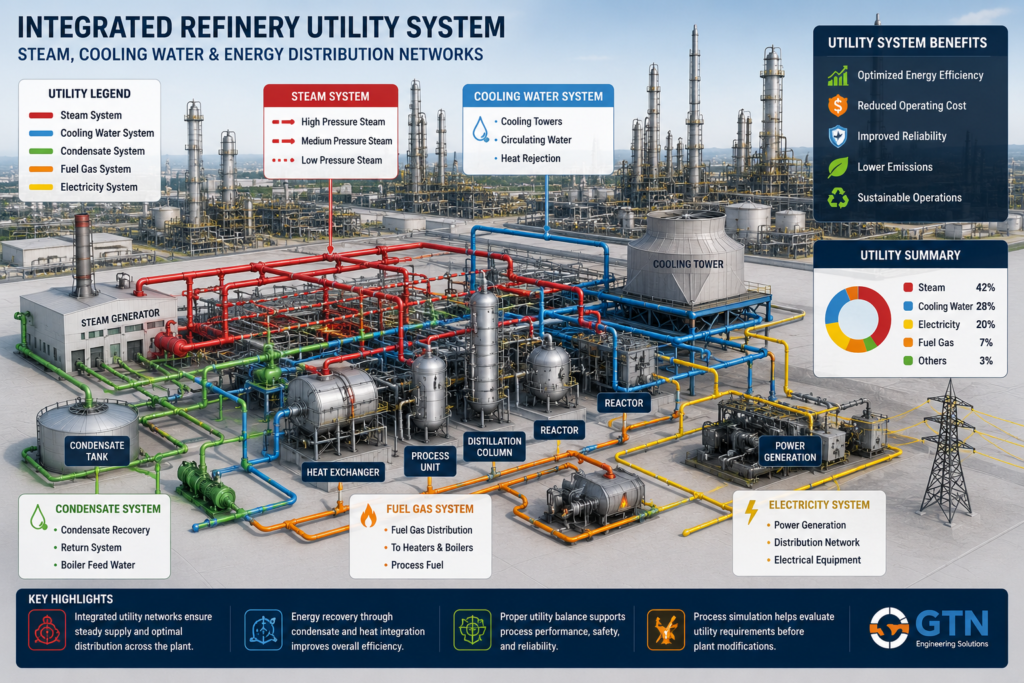
Many modification projects focus on process equipment but overlook utilities.
Utility systems often determine whether a project succeeds.
Engineers should evaluate:
- Steam demand
- Cooling water requirements
- Fuel consumption
- Electricity usage
- Condensate recovery
Process simulation provides realistic utility estimates during project planning. These studies are often combined with Energy Optimization Services to improve plant efficiency and reduce operating costs.
5. Identify New Bottlenecks Before They Appear
Removing one bottleneck does not guarantee improved plant performance.
In many cases, the bottleneck simply moves to another location.
This is why Process Simulation for Plant Modifications is critical.
Simulation helps engineers understand how the entire plant responds to proposed changes.A detailed Refinery Feasibility Study can help determine whether proposed modifications are technically and economically viable
As a result, future constraints can be identified before construction begins.
6. How Process Simulation Improves Heat Exchanger Performance Analysis
Heat exchangers play a major role in plant efficiency.
Process changes can affect:
- Heat duty
- Outlet temperatures
- Utility consumption
- Heat recovery performance
Simulation helps engineers verify whether existing exchangers can support new operating conditions. Additional energy savings may be achieved through Heat Integration Studies that improve heat recovery throughout the facility.
Example
A feed increase may require additional heat transfer area. Simulation can identify this requirement before plant startup.
7.Validate Distillation Column Performance
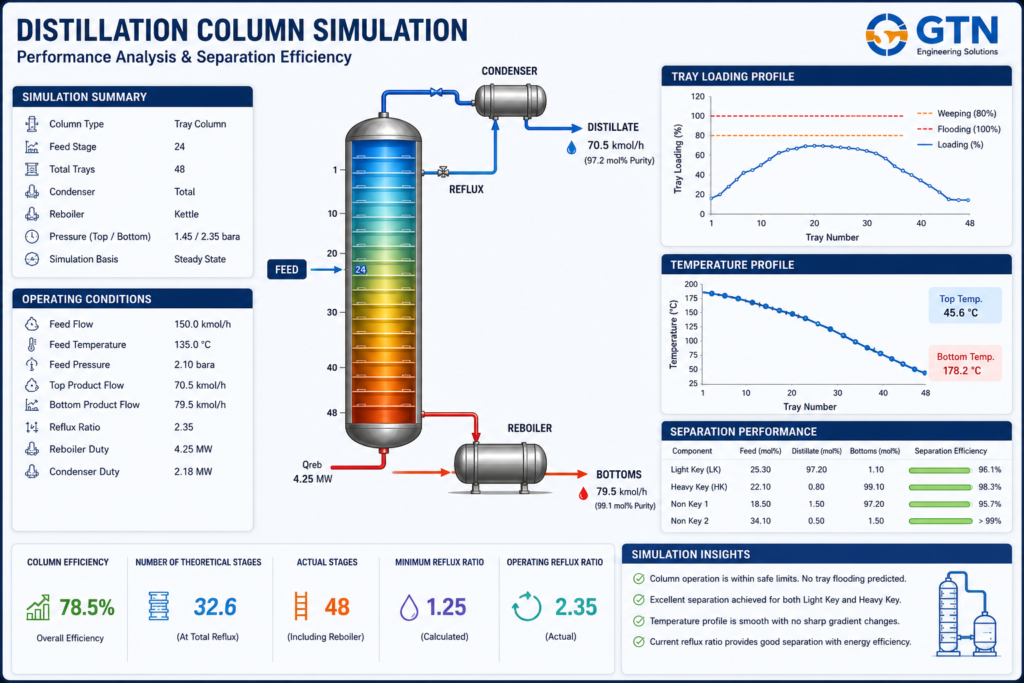
Distillation columns are among the most sensitive process units.
Small changes in operating conditions can significantly affect performance.
Simulation can evaluate:
- Flooding risk
- Tray loading
- Reflux requirements
- Product recovery
- Column pressure profile
These checks reduce operational risk after implementation.
8. Review Process Control Performance
A modification may change how the plant responds to operating conditions.
Engineers should review:
- Control valve sizing
- Flow control response
- Pressure control stability
- Temperature control effectiveness
Good control performance improves plant reliability and operator confidence.
Simulation helps identify potential control issues before startup.
9. Analyze Energy Consumption
Energy costs directly affect plant profitability.
Before implementing modifications, engineers should understand how energy usage will change.
Simulation helps compare:
- Current energy consumption
- Modified operating conditions
- Utility costs
- Heat recovery opportunities
This analysis often reveals opportunities for additional savings.
10.Verify Project Economics

Technical success alone does not guarantee business success.
Every modification should be supported by economic analysis.
Process simulation provides valuable information for:
- Capital cost estimates
- Operating cost calculations
- Production gain analysis
- Return on investment studies
These results help management make informed decisions.
Common Mistakes When Modifying Process Plants
Many projects experience problems because key engineering checks are skipped.
Common mistakes include:
- Assuming equipment has spare capacity
- Ignoring utility limitations
- Focusing on one process unit only
- Overlooking product quality impacts
- Skipping simulation studies to save time
These shortcuts often create larger costs later.
A proper simulation study helps avoid these issues.
How GTN Engineering Supports Plant Modification Projects
At GTN Engineering Solutions, we use advanced process simulation techniques to evaluate plant modifications before implementation.
Our engineering team supports:
- Process Modeling and Simulation
- Feasibility Studies
- Debottlenecking Studies
- Energy Optimization
- Process Equipment Design
- Refinery and Petrochemical Engineering Projects
Through detailed engineering analysis, we help clients reduce risk, improve performance, and make better investment decisions.
Conclusion
Plant modifications can improve production, efficiency, and profitability. However, successful projects require more than good intentions. They require engineering validation.
Process Simulation for Plant Modifications provides a reliable method to evaluate equipment performance, utility requirements, product quality, energy consumption, and project economics before implementation.
By validating these ten critical engineering checks, companies can reduce risk, avoid costly surprises, and achieve better project outcomes.