

Introduction
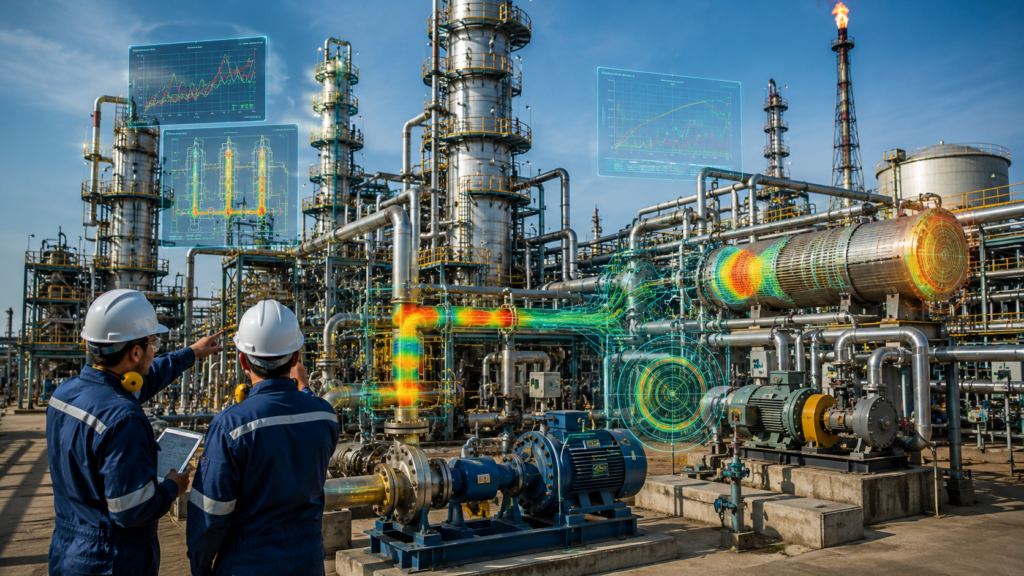
Chemical Plant Troubleshooting is a systematic engineering process used to identify, analyze, and solve operational problems in industrial facilities. Every chemical plant, refinery, and petrochemical facility faces challenges such as reduced production, high energy consumption, equipment performance issues, or unstable operations.
When these problems are not addressed properly, they can increase operating costs, affect product quality, and reduce profitability. This is why engineers follow a structured troubleshooting approach. Instead of relying on assumptions, they use operating data, engineering analysis, and process knowledge to identify the real cause of a problem.
In today’s competitive industrial environment, plant owners are under constant pressure to improve efficiency, reduce energy use, and maintain reliable operations. Effective troubleshooting helps organizations achieve these goals while supporting safe and stable plant performance.
Why Chemical Plant Troubleshooting Is Important
Operational issues can develop gradually or appear without warning. In many cases, the visible problem is only a symptom. The actual cause may exist elsewhere in the process.
For example, a distillation column may show unstable operation, but the root cause could be changes in feed conditions, utility limitations, or heat exchanger performance. Without a structured investigation, plants may spend time and money addressing symptoms instead of solving the actual problem.
A proper troubleshooting study helps organizations:
- Improve plant reliability
- Increase production rates
- Reduce energy consumption
- Improve product quality
- Lower maintenance costs
- Minimize unplanned shutdowns
- Improve process safety
Even small operational issues can create significant production losses when left unresolved.
Common Problems Found in Chemical Plants
Engineers regularly investigate a wide range of operational challenges across chemical, refinery, and petrochemical facilities.
Reduced Plant Capacity
Many plants struggle to achieve their intended production rates. Companies often look for ways to increase plant capacity without major capital investment. This often happens because of process bottlenecks, equipment limitations, or utility constraints..
High Energy Consumption
Unexpected increases in steam, fuel, electricity, or cooling water consumption may indicate process inefficiencies that require investigation.
Product Quality Variations
Changes in product specifications can result from unstable operating conditions, equipment performance issues, or process control problems.
Equipment Performance Issues
Common examples include:
- Heat exchanger fouling
- Pump cavitation
- Compressor efficiency loss
- Distillation column instability
- Control valve malfunction
Frequent Process Upsets
Repeated alarms, trips, and unstable operations often indicate deeper process issues that need detailed engineering analysis.
A Structured Chemical Plant Troubleshooting Methodology
Successful troubleshooting follows a logical process. Each step helps engineers move closer to the root cause of a problem.
Step 1: Clearly Define the Problem
The first step is understanding exactly what is happening.
Engineers ask questions such as:
- What has changed?
- When did the issue begin?
- Which process unit is affected?
- Is the problem continuous or intermittent?
- Which operating parameters are outside normal limits?
A clear problem statement improves the quality of the investigation and prevents wasted effort.
Step 2: Collect Operating Data
Accurate troubleshooting begins with reliable data.
Engineers gather information such as:
- Flow rates
- Temperatures
- Pressures
- Utility consumption
- Product quality data
- Historical operating records
Comparing current operating conditions with design values often provides valuable clues.
Step 3: Verify Data Accuracy
Before performing detailed analysis, engineers must confirm that the available data is accurate.
Typical verification activities include:
- Instrument calibration checks
- Flow meter validation
- Laboratory result verification
- Pressure indicator inspection
- Control system review
Incorrect measurements can lead to incorrect conclusions.
Step 4: Perform Root Cause Analysis
Root cause analysis helps engineers determine why a problem is occurring.
Several techniques are commonly used.
The 5 Why Method
Engineers repeatedly ask “Why?” until they identify the underlying cause of the issue.
Cause-and-Effect Analysis
Potential causes are grouped into categories such as:
- Equipment
- Process conditions
- Utilities
- Materials
- Operating practices
This approach helps eliminate assumptions and focus on factual evidence.
Step 5: Evaluate Equipment Performance
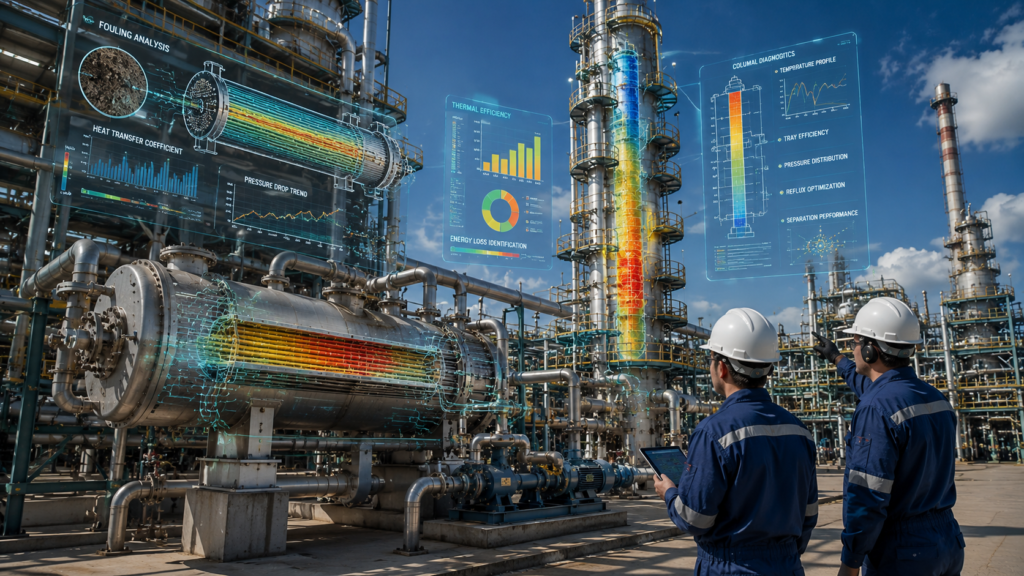
Many plant problems are linked to equipment performance.
Heat Exchangers
Engineers assess:
- Fouling levels
- Heat transfer efficiency
- Pressure drop
Distillation Columns
Engineers evaluate:
- Tray performance
- Column hydraulics
- Reflux conditions
Pumps
Engineers review:
- Flow performance
- NPSH availability
- Cavitation risks
Compressors
Engineers examine:
- Capacity
- Efficiency
- Power consumption
Step 6: Use Process Simulation for Validation
Modern troubleshooting studies often use process simulation tools to support decision-making.
Simulation allows engineers to:
- Recreate plant operating conditions
- Validate process data
- Evaluate improvement options
- Predict process behavior
- Reduce implementation risks
Instead of making changes directly in the plant, engineers can evaluate different scenarios within a simulation environment before implementation.
Step 7: Develop Corrective Actions
Once the root cause has been identified, engineers develop practical solutions.
These solutions may include:
- Process optimization
- Equipment modifications
- Control strategy improvements
- Utility system improvements
- Maintenance actions
- Debottlenecking measures
The goal is to achieve sustainable improvements while minimizing operational risks.
Step 8: Monitor Results
Troubleshooting does not end after corrective actions are implemented.
Engineers continue monitoring:
- Production rates
- Energy consumption
- Product quality
- Operating stability
This ensures that the problem has been fully resolved and does not reoccur.
Common Challenges During Chemical Plant Troubleshooting
Troubleshooting industrial facilities is rarely straightforward. Engineers often face several challenges during investigations.
Incomplete Operating Data
Missing or inconsistent operating data can make it difficult to identify trends and determine root causes.
Instrument Errors
Faulty instruments can create misleading information and complicate troubleshooting efforts.
Multiple Interacting Variables
Modern process plants contain many interconnected systems. A change in one area can affect several other units.
Limited Shutdown Opportunities
Many facilities operate continuously and cannot afford extended shutdowns for investigation.
Utility System Constraints
Steam, cooling water, fuel gas, and power systems often influence overall plant performance and must be included in the analysis.
Understanding these challenges helps engineers perform more effective investigations.
Case 1: Crude Distillation Unit Throughput Reduction
A refinery is unable to achieve its target crude processing rate.
Engineers review:
- Heat exchanger performance
- Furnace duty
- Column pressure profiles
- Pump operating conditions
The investigation identifies severe heat exchanger fouling, which is one of the most common refinery bottlenecks affecting throughput and energy efficiency. Reduced heat recovery increases furnace duty and limits production rates.
After cleaning the affected exchangers and optimizing operating conditions, the refinery restores production capacity without major capital investmen
Case 2: Excess Steam Consumption
A petrochemical facility notices a significant increase in steam usage.
Engineers perform energy optimization studies and a steam balance assessment to evaluate:
- Steam distribution systems
- Condensate recovery performance
- Utility operating practices
- heat integration opportunities
The investigation identifies steam leaks and poor condensate recovery.
Corrective actions reduce steam consumption and lower operating costs while maintaining production targets.
Case 3: Distillation Column Product Quality Issues
A chemical plant experiences frequent product specification deviations.
Engineers investigate:
- Reflux ratio
- Feed composition changes
- Column operating pressure
- Tray performance
The root cause is traced to unstable feed conditions and inefficient control settings.
After optimization, product quality improves and process stability increases.
Why Process Simulation Supports Chemical Plant Troubleshooting
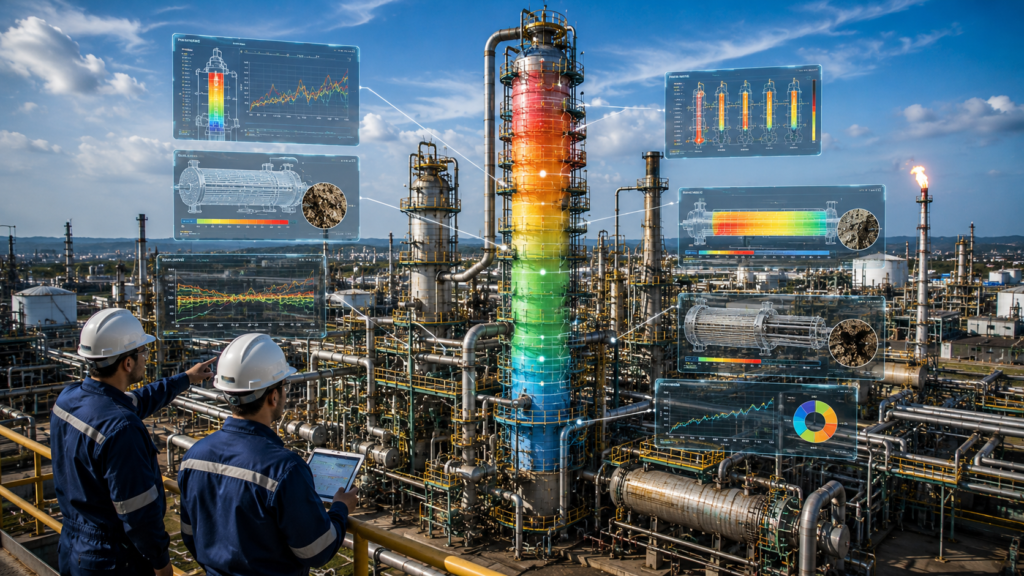
Process simulation has become one of the most valuable tools for troubleshooting complex industrial facilities.
Simulation helps engineers:
- Validate plant operating data
- Understand process interactions
- Identify hidden bottlenecks
- Compare alternative solutions
- Predict process performance
For refinery and petrochemical facilities, simulation reduces uncertainty and supports better engineering decisions.
It also helps plant owners evaluate improvement opportunities before committing resources to plant modifications.
How Engineering Consultants Support Troubleshooting Projects
Complex operational issues often require specialist engineering expertise and independent technical evaluation.
Engineering consultants support troubleshooting projects by:
- Performing process simulations
- Conducting debottlenecking studies
- Evaluating equipment performance
- Identifying energy-saving opportunities
- Reviewing process safety impacts
- Developing improvement recommendations
A structured engineering study helps organizations solve recurring problems while improving reliability, safety, and profitability.
For large facilities, an independent engineering assessment can often identify improvement opportunities that may not be visible during routine operations.
Benefits of Chemical Plant Troubleshooting
Organizations that follow a systematic troubleshooting process achieve several important benefits.
Improved Reliability
Recurring problems are identified and permanently resolved.
Increased Production
Hidden process constraints can be removed to improve throughput.
Lower Operating Costs
Energy waste and process inefficiencies are reduced.
Better Product Quality
Stable operation helps maintain product specifications.
Improved Safety
Potential operational risks can be identified before they become serious incidents.
Better Decision-Making
Engineering analysis and process simulation provide confidence before implementing changes.
When Is Chemical Plant Troubleshooting Required?
A troubleshooting study should be considered when:
- Production targets are not achieved
- Energy consumption increases unexpectedly
- Product quality becomes inconsistent
- Equipment failures become frequent
- Process instability continues
- Plant modifications are being planned
- Operating costs increase without a clear reason
Early investigation often prevents larger operational and financial losses.
Conclusion
Chemical Plant Troubleshooting is much more than solving day-to-day operational issues. It is a structured engineering approach that helps organizations improve reliability, increase production, reduce energy consumption, and enhance profitability.
By combining operating data analysis, root cause investigation, equipment evaluation, and process simulation, engineers can identify the true source of plant problems and develop effective solutions.
For refineries, petrochemical facilities, and chemical plants, a systematic troubleshooting methodology supports safer operations, better decision-making, and long-term operational excellence. As plants continue to face increasing efficiency and sustainability demands, effective troubleshooting remains an essential part of achieving strong and reliable performance.