
Introduction
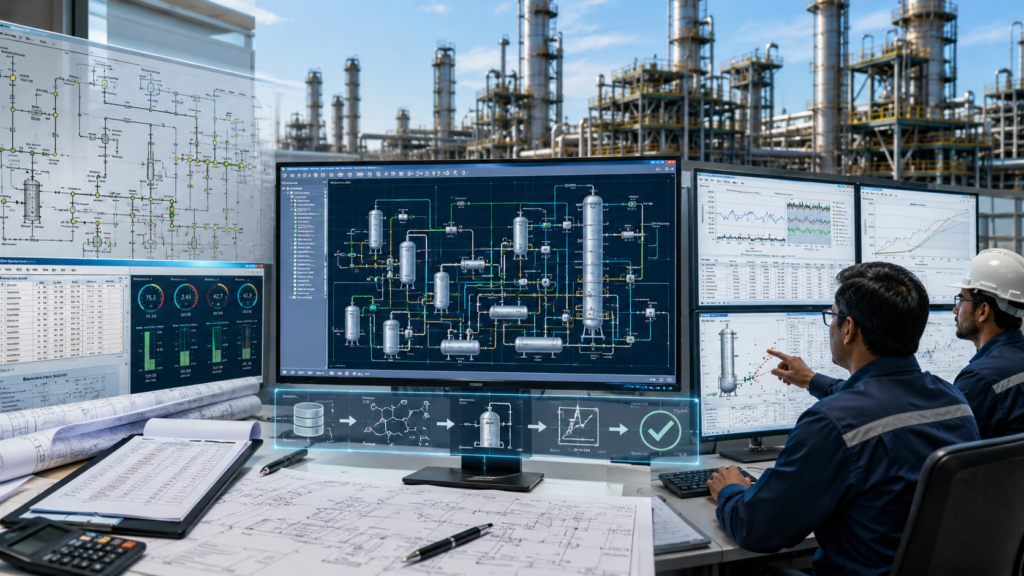
A Process Simulation Model helps engineers understand how a process plant will perform before making operational or design changes. Instead of relying on assumptions, engineers create a digital representation of the plant and use it to evaluate equipment performance, operating conditions, and process behavior.
In industries such as refining, petrochemicals, chemicals, and oil & gas, Engineering decisions for plant expansion projects often involve significant investment and operational risk.. A well-developed process simulation model allows engineers to study these decisions before implementing them in the actual plant.
However, a simulation model is only useful when it accurately reflects real plant conditions. This is why model development and validation are critical steps in every engineering study.
What Is a Process Simulation Model?
A Process Simulation Model is a computer-based representation of a process plant. It uses engineering calculations, thermodynamic relationships, and operating data to predict how equipment and process units will perform.
The model can represent:
- Distillation columns
- Heat exchangers
- Pumps
- Compressors
- Reactors
- Utility systems
- Storage and transfer systems
Engineers use these models to analyze existing operations and evaluate proposed changes before implementation.
A simulation model does not replace engineering judgment. Instead, it provides data that helps engineers make better decisions.
Why a Process Simulation Model Must Be Accurate
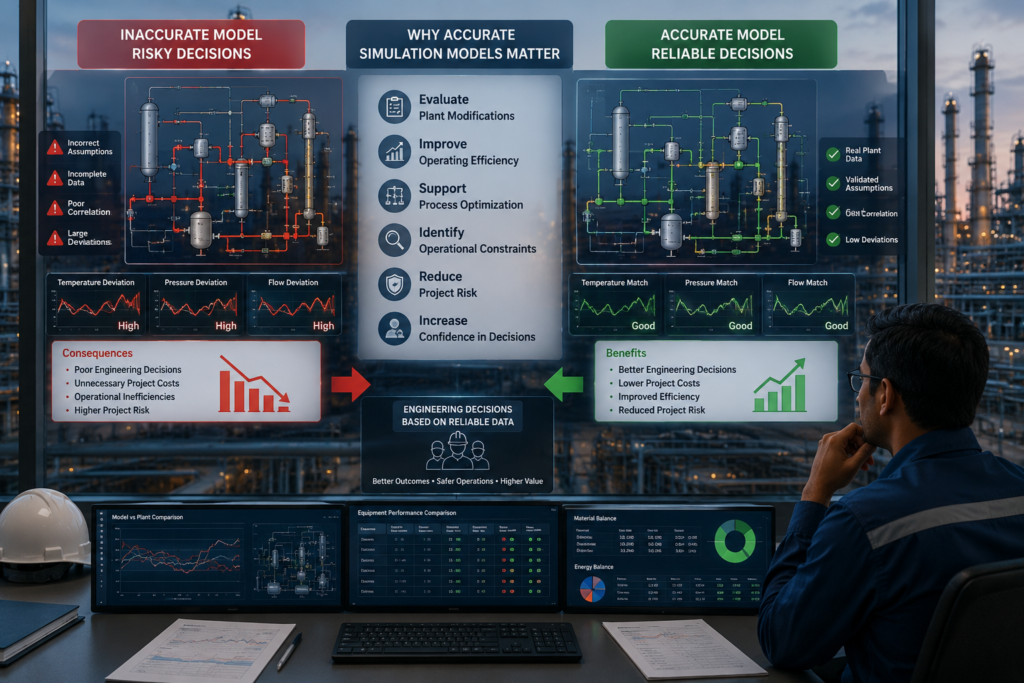
A simulation model is only valuable when it reflects actual plant performance.
If the model is built using incorrect assumptions or incomplete data, the results may not represent real operating conditions. This can lead to poor engineering decisions and unnecessary project costs.
Accurate models help engineers:
- Evaluate plant modifications
- Improve operating efficiency
- Support process optimization studies
- Identify operational constraints
- Reduce project risk
- Improve confidence in engineering decisions
For this reason, engineers spend considerable time validating simulation results before using them in engineering projects.
Step 1: Collecting Data for a Process Simulation Model
The first step in building a Process Simulation Model is gathering accurate plant information.
Engineers typically collect:
Process Data
- Flow rates
- Temperatures
- Pressures
- Product quality information
Feed Data
- Composition
- Density
- Physical properties
Equipment Data
- Equipment dimensions
- Design specifications
- Operating limits
The quality of the simulation model depends heavily on the quality of this information.
Before building the model, engineers review available data to identify missing or inconsistent values.
Step 2: Selecting Thermodynamics for a Process Simulation Model
Thermodynamics forms the foundation of process simulation.
Different process systems require different thermodynamic methods to predict phase behavior and physical properties.
The selected method affects calculations such as:
- Vapor-liquid equilibrium
- Heat transfer
- Energy balances
- Product compositions
Choosing the wrong thermodynamic model can lead to inaccurate results, even when the plant data is correct.
For this reason, experienced engineers carefully select the most suitable method for each application.
Step 3: Building Equipment Models
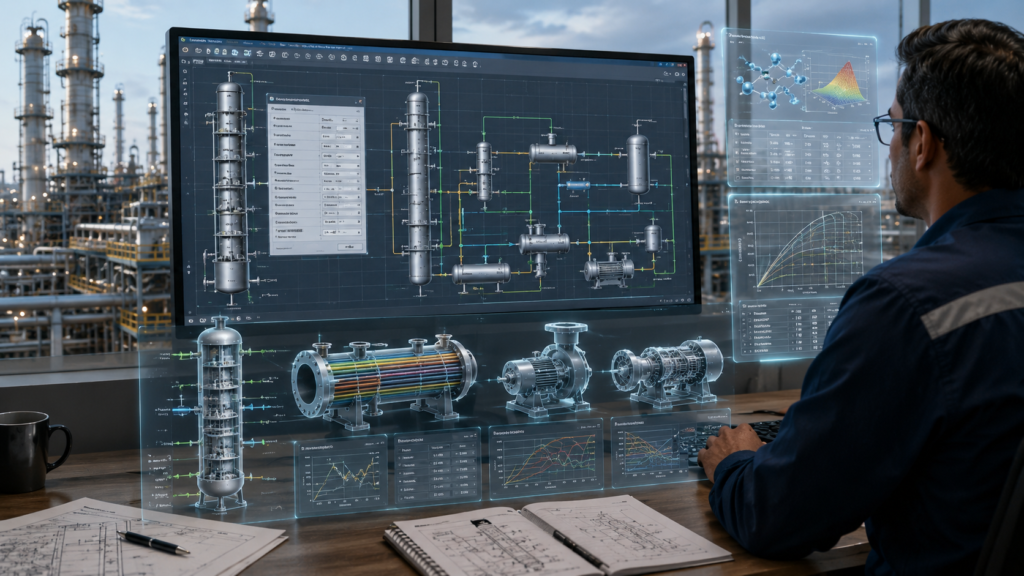
After collecting data and selecting the thermodynamic package, engineers begin creating equipment models.
Each piece of equipment is represented using its design and operating information.
Examples include:
Distillation Columns
- Number of stages
- Feed locations
- Operating pressure
Heat Exchangers
- Heat transfer area
- Process streams
- Duty requirements
Pumps and Compressors
- Flow rates
- Pressure requirements
- Performance curves
This step converts plant information into a working simulation model.
Step 4: Running Initial Simulations
Once the equipment models are connected, engineers perform initial simulation runs.
At this stage, the objective is to check whether the model behaves similarly to the actual plant.
Engineers compare predicted values with operating data, including:
- Product yields
- Temperatures
- Pressures
- Flow rates
- Utility consumption
Differences are common during the first simulation runs.
These differences help engineers identify areas that require adjustment.
Step 5: Calibrating the Model
Calibration is the process of refining the simulation model to better match actual plant performance.
Engineers review:
- Feed properties
- Equipment assumptions
- Operating conditions
- Model parameters
Small adjustments are made until the simulation closely reflects plant data.
Calibration improves confidence in future simulation results.
Without proper calibration, the model may not provide reliable engineering guidance.
Step 6: Validating Results Against Plant Data
Validation is one of the most important stages of simulation development.
During validation, engineers compare model predictions with actual plant performance under multiple operating conditions.
A validated model should accurately predict:
- Product quality
- Energy consumption
- Equipment performance
- Utility usage
- Process trends
Only after successful validation should a model be used to support engineering decisions.
Common Mistakes in Process Simulation Modeling
Even experienced engineers can encounter challenges during simulation projects.
Some common issues include:
Incomplete Plant Data
Missing information can reduce model accuracy.
Incorrect Assumptions
Unrealistic operating assumptions often lead to misleading results.
Poor Equipment Representation
Oversimplified equipment models may not reflect actual performance.
Lack of Validation
Using a model without proper validation can create significant project risks.
Recognizing these issues early improves model reliability.

How Engineers Determine Whether a Model Can Be Trusted
A reliable Process Simulation Model should consistently match plant performance across different operating conditions.
Engineers typically evaluate:
- Material balance accuracy
- Energy balance accuracy
- Product quality predictions
- Equipment performance trends
- Historical operating data
If the model continues to perform well during these checks, it can be used for further engineering studies.
Trust is not built through software alone. It comes from accurate data, sound engineering practices, and thorough validation.
Applications of a Validated Process Simulation Model
Once validated, a simulation model becomes a valuable engineering tool.
It can support:
- Process optimization studies
- Feasibility studies
- Debottlenecking projects
- Energy optimization initiatives
- Equipment evaluations
- Capacity expansion assessments
- Process troubleshooting activities
Because the model reflects actual plant behavior, engineers can evaluate potential improvements with greater confidence.
How GTN Engineering Supports Process Simulation Projects
GTN Engineering Solutions helps clients develop and use simulation models for engineering analysis and decision-making.
Our team supports projects involving:
- Process modeling and simulation
- Feasibility studies
- Process optimization
- Energy optimization
- Equipment performance evaluation
- Debottlenecking studies
- Troubleshooting investigations
By combining engineering expertise with practical industry knowledge, GTN helps clients make informed decisions that improve plant performance and operational reliability.
Conclusion
A Process Simulation Model is much more than a software exercise. It is a valuable engineering tool that helps companies understand plant performance, evaluate improvement opportunities, and reduce project risk.
The accuracy of a simulation model depends on proper data collection, appropriate engineering assumptions, careful calibration, and thorough validation. When these steps are followed correctly, simulation models become powerful tools for supporting engineering decisions and improving operational performance.
For industries seeking safer, more efficient, and more reliable operations, a well-validated process simulation model remains one of the most effective tools available